


During the National Day holiday, cross-border e-commerce at Shanghai ports remained busy: imports cleared customs quickly while export goods were rushed into containers for overseas markets.
With overseas platforms entering their year-end promotion stocking period, the Shanghai maritime cross-border e-commerce operations center in the Waigaoqiao port area received batches of clothing and gifts from factories in the Yangtze River Delta. Customs' innovative "master bill plus consolidated container" supervision model solves the problem smaller firms faced -- being unable to wait to fill a container and facing high costs for separate shipments.
At the Songjiang air pre-positioned cargo station, staff sorted and packed cross-border e-commerce goods, with average daily shipments reaching 100 tonnes during the holiday.
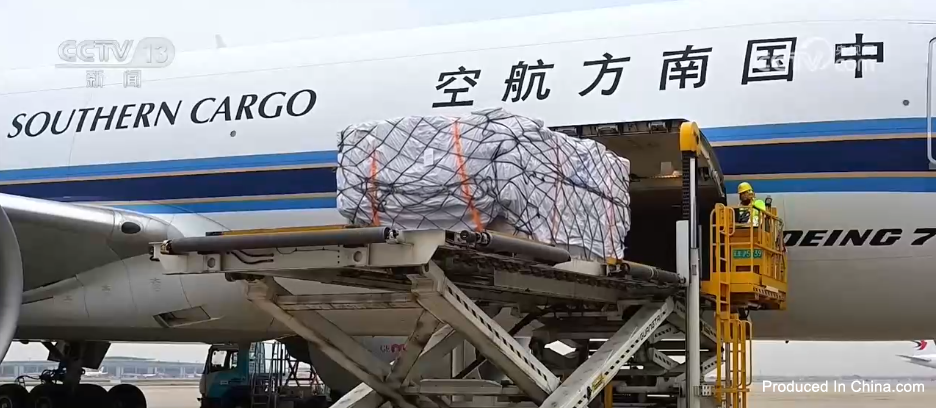
A logistics company manager said goods previously had to be delivered to the Pudong airport cargo terminal days in advance, queuing for security checks and inspections, with repeated site visits when flights were adjusted and waits of a day or two at peak times. Now goods delivered to the pre-positioned station effectively board an express lane to overseas markets, cutting logistics costs by 10 to 15 percent.
Customs officials said supervision is embedded in companies' warehousing and logistics operations, and non-intrusive smart inspection equipment enables most goods to clear customs without stopping, shortening logistics time by an average of 30 percent.
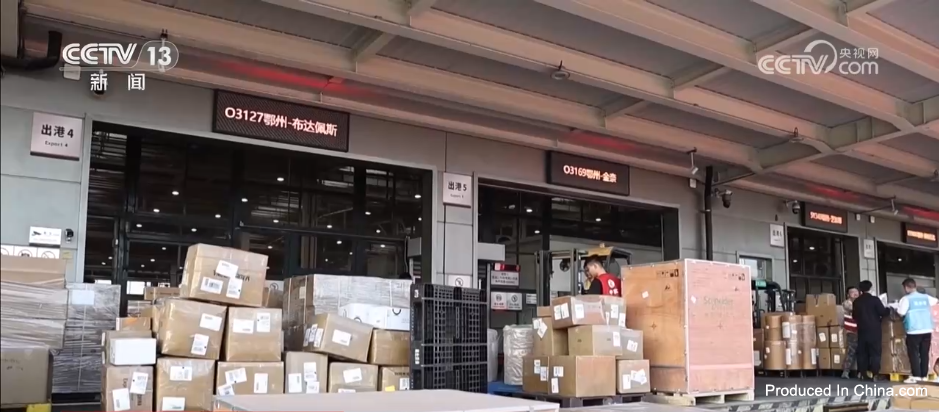
Customs data show Shanghai's cross-border e-commerce exports have exceeded 100 billion yuan this year, up nearly 30 percent year on year and maintaining double-digit growth for eight consecutive months. Pudong airport has ranked first nationally in air cross-border e-commerce manifests for three consecutive years.
In Hubei, Ezhou Huahu International Airport -- Asia's first dedicated cargo airport -- saw steady freight traffic during the holiday, with cross-border cold-chain fresh products entering China quickly and reaching the domestic market.

During the holiday, an average of 30 flights arrived at and departed from the airport daily. From January to September, international cargo and mail throughput exceeded 380,000 tonnes, up 6.9 percent year on year and a record for the period.
The airport now operates 122 cargo routes, the most in China, including 59 international routes connecting more than 170 countries and regions. Norwegian salmon, Thai durian, Boston lobster and chilled beef can be distributed to markets nationwide within 24 hours.
Gu Yong, deputy head of Ezhou customs, said the authority innovated an "air-to-air transfer" supervision model allowing goods to transit directly within the controlled zone without repeated declaration. Smart image review and a smart port system have cut express clearance time by 70 percent and overall costs by 30 percent, a model the World Customs Organization has promoted globally as an innovation case.

