


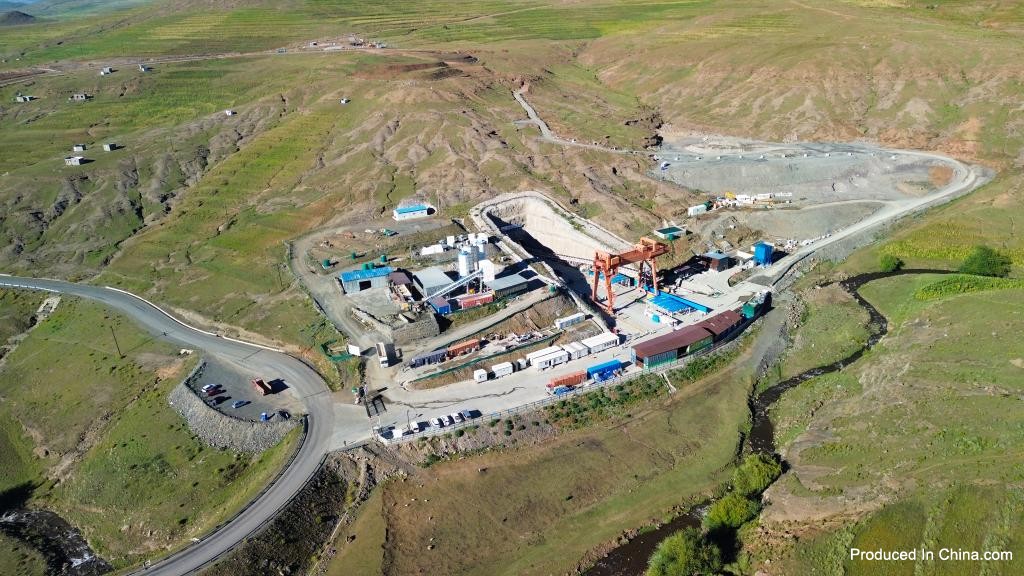
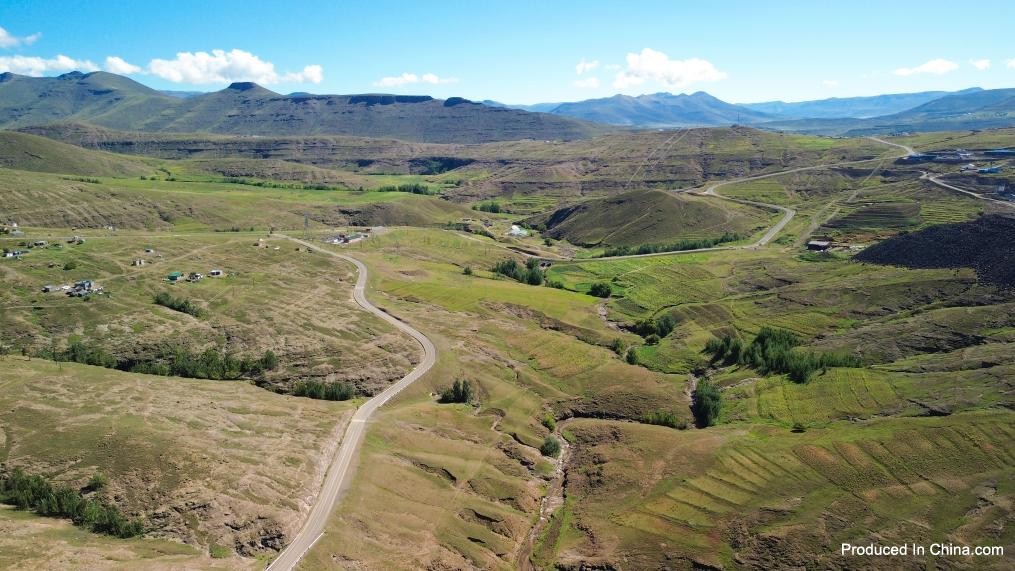
It is mid-autumn in the Southern Hemisphere, but the midday sun still burns over Lesotho, southern Africa’s ’Kingdom in the Sky’. Driving east from the capital Maseru into the Mokhotlong mountains, the winding road climbs among peaks over 2,000 meters. Halfway up, a ’steel dragon’ lies quietly in a tunnel, awaiting its ’moment of departure’.
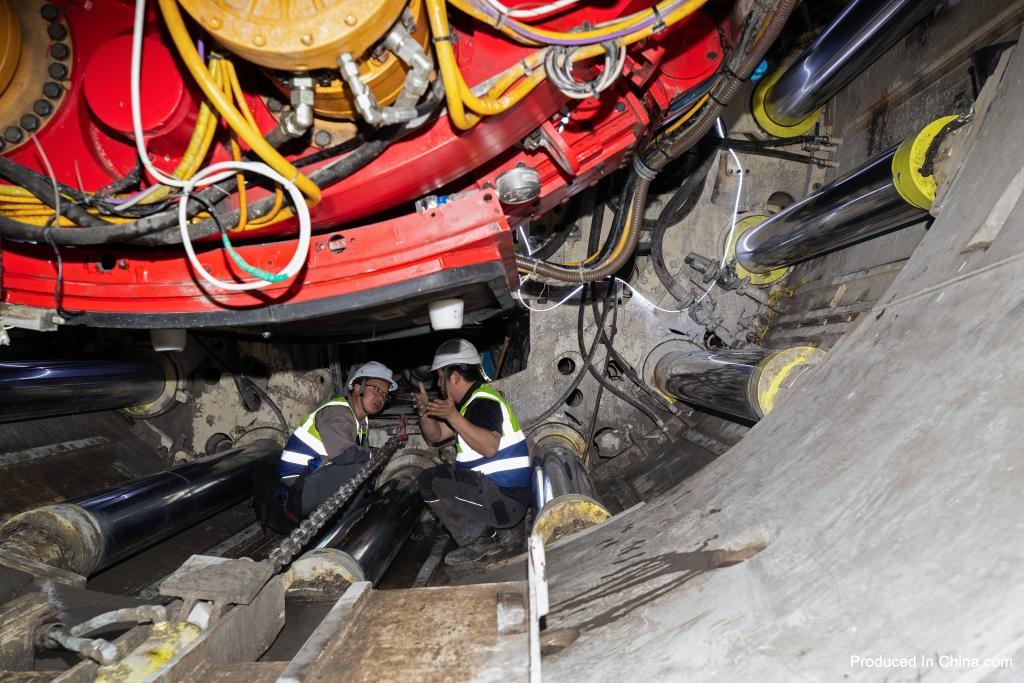
This ’steel dragon’ is the Dayu Xuedun (’Snow Shield’), a hard-rock tunnel boring machine custom-built by China for Phase II of the Lesotho Highlands Water Project. Thirty-four kilometers away, its twin, the Dayu Changfeng (’Long Blade’), has been boring independently for over a year.
On April 20, in the presence of dignitaries from Lesotho and South Africa and the Chinese ambassador to Lesotho, the Dayu Xuedun held its launch ceremony. As the cutterhead broke into hard rock, the two ’steel dragons’ began boring toward each other from the inlet and outlet ends of the tunnel.
Lesotho, with three-quarters of its eastern territory mountainous and an average elevation above 1,000 meters, is rich in water and an important water source for neighboring countries.
As the largest infrastructure project between Lesotho and South Africa, the Highlands Water Project is being implemented in four phases, planning to divert water from Lesotho’s mountains to water-scarce areas of South Africa through a network of dams and tunnels. The Polihali transfer tunnel, a key Phase II project, is regarded as a world-class water engineering undertaking for its complex conditions and extreme technical difficulty.
Hard rock, deep overburden and complex geology make construction highly challenging. The Dayu Changfeng and Dayu Xuedun are equipped with heavy-duty hard-rock cutterheads and routinely deployed advanced forward drilling systems to ensure efficient, safe construction in complex geology.
The project also applies world-leading technologies such as ’two-phase grouting’ — injecting cement slurry and sodium silicate into gaps between segments and rock walls as ’reinforcing glue’, greatly improving tunnel solidity and construction efficiency.
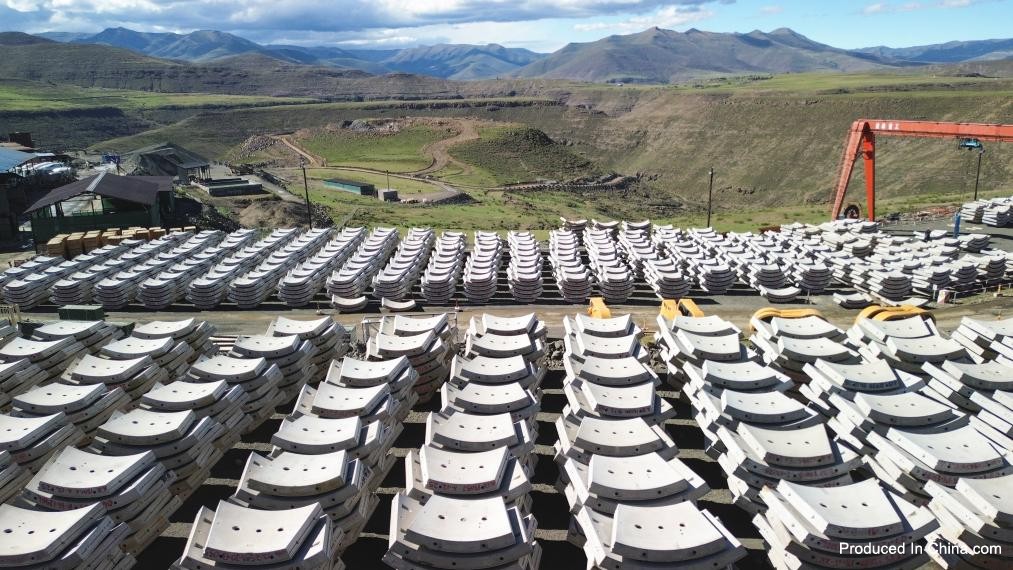
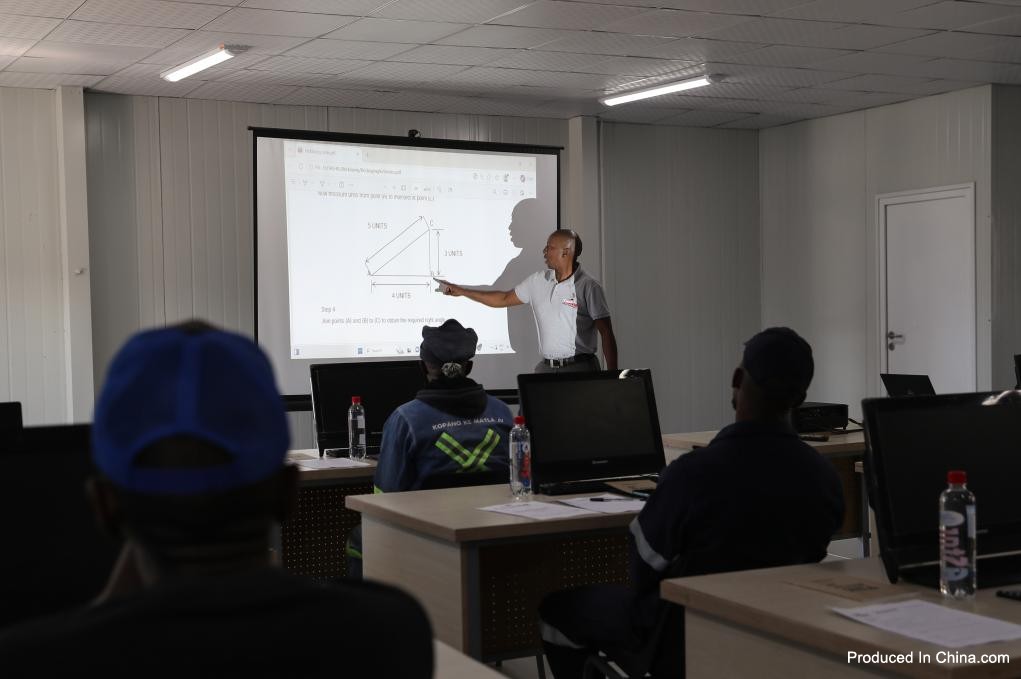
The project builds more than tunnels; it improves livelihoods. Lacking a prefabricated building-materials industry, Chinese experts spent two years training local workers hands-on; two segment plants now produce independently, with 150+ local employees completing all processes on their own. The project has created over 2,000 jobs, drawing young workers from 15 surrounding villages.
The project also runs training classes in first aid, concrete work, plumbing and other skills, planning to cultivate 3,500 skilled workers. Local employee Manaha Neha, 26, started as a cleaner and now heads the headlamp room after training. ’I can not only support my family but also pay for my niece’s schooling,’ she said.
Since 2023 the company has improved village infrastructure — renovating football fields and clinics, adding public toilets, childcare centers and market stalls — continuously improving villagers’ living environment.
Given Lesotho’s fragile ecology, environmental protection is a priority. Sewage treatment equipment ensures compliant discharge or recycling of wastewater, and contaminated soil is treated and vegetation restored after oil spills. ’Construction must not come at the cost of the ecology,’ said safety director Wang Yong.
Upon completion, Lesotho’s annual water transfer capacity to South Africa will rise from 780 million to 1.27 billion cubic meters, easing water shortages in five South African provinces while boosting Lesotho’s hydropower capacity and bringing stable revenue.
Chinese Ambassador to Lesotho Yang Xiaokun said the project is both major infrastructure and a core livelihood and economic engine — a vivid demonstration of solidarity among developing countries.
At the ceremony, Lesotho’s Minister of Natural Resources Mohlomi Moleko thanked the builders for their contributions to the two countries’ economies, employment, businesses and livelihoods.
When clear water crosses the mountains, it nourishes not only South Africa’s land but also the livelihood and development of the ’Kingdom in the Sky’.

