


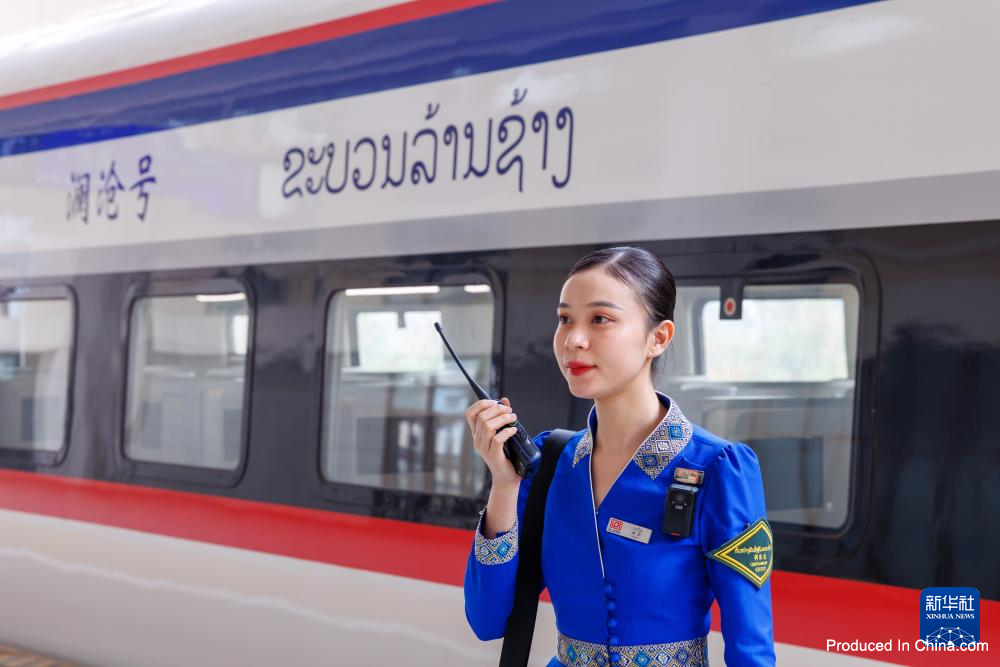
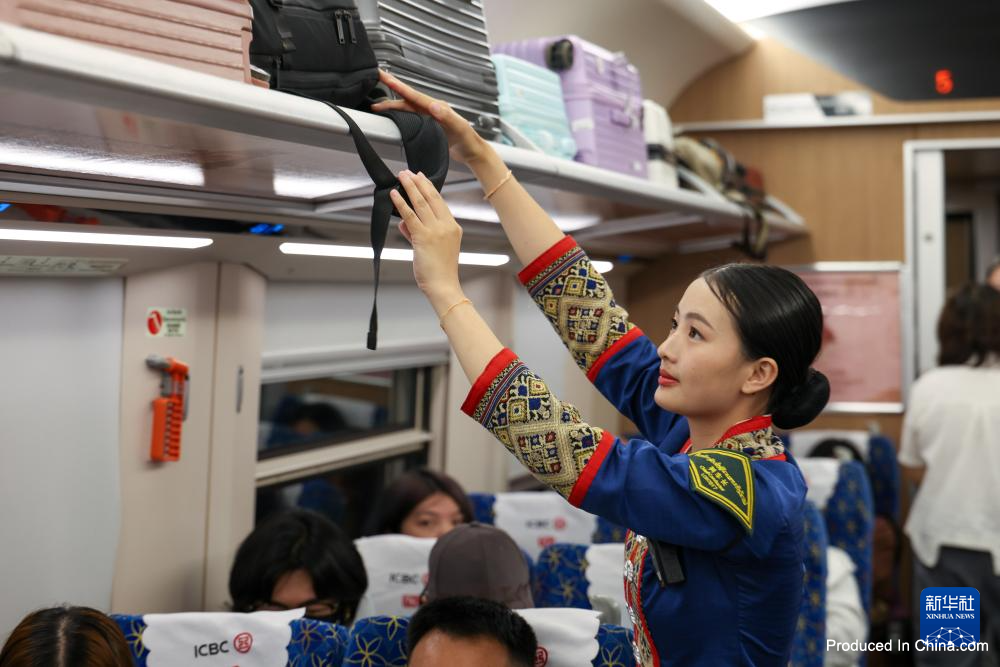
At 11:25 a.m. local time on April 18, international passenger train D84 pulled out of Vientiane Station, racing toward Kunming, China, along the 1,035-km China-Laos Railway.
Since opening in December 2021, this ’Steel Silk Road’ has woven itself into the economic and social fabric of both countries, a vivid practice of high-quality Belt and Road cooperation that keeps releasing the strong momentum of a ’golden corridor’.
Passenger boom builds a new pattern of people-to-people exchange. ’Taking the train to China is so convenient now — coffee in Vientiane in the morning, rice noodles in Kunming by evening,’ said Lao guide Khamphone Sourivong. Most of the Chinese tour groups he hosted this year chose cross-border travel on the railway.
By April, the railway had carried over 800,000 cumulative cross-border passengers. During this year’s Chinese New Year alone it handled 12,900 cross-border passenger trips, up 41.8% year-on-year — ’cross-border travel by train’ has become a new regional fashion.
The ’railway plus tourism’ model is boosting local development. Lao National Radio reported that the cross-border trains link Kunming and Xishuangbanna in China with Luang Prabang and Vang Vieng in Laos — a golden cross-border tourist route.
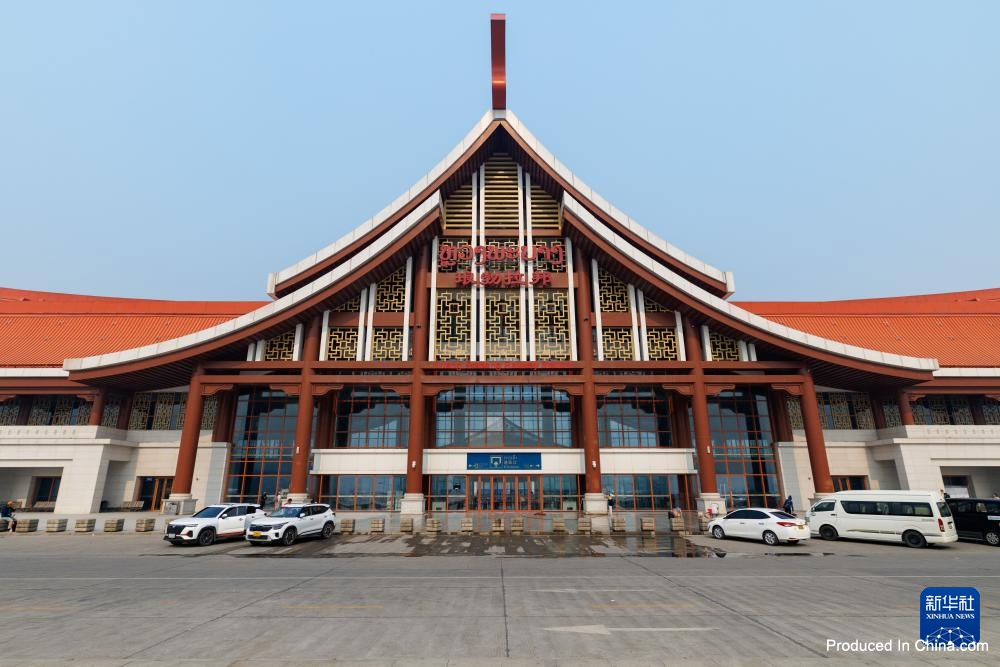
Luang Prabang Station, the busiest on the Lao section, blends Lao Wat Xieng Thong’s ’ren’-shaped roof, Royal Palace Museum and Buddhist elements. Station master Yin Zhaoliang said: ’Since the railway opened, the number of hotels in Luang Prabang has more than tripled, with 7,000 more rooms coming this year. Over 400 minibuses and 10 buses shuttle passengers daily, giving more than 500 drivers stable work.’
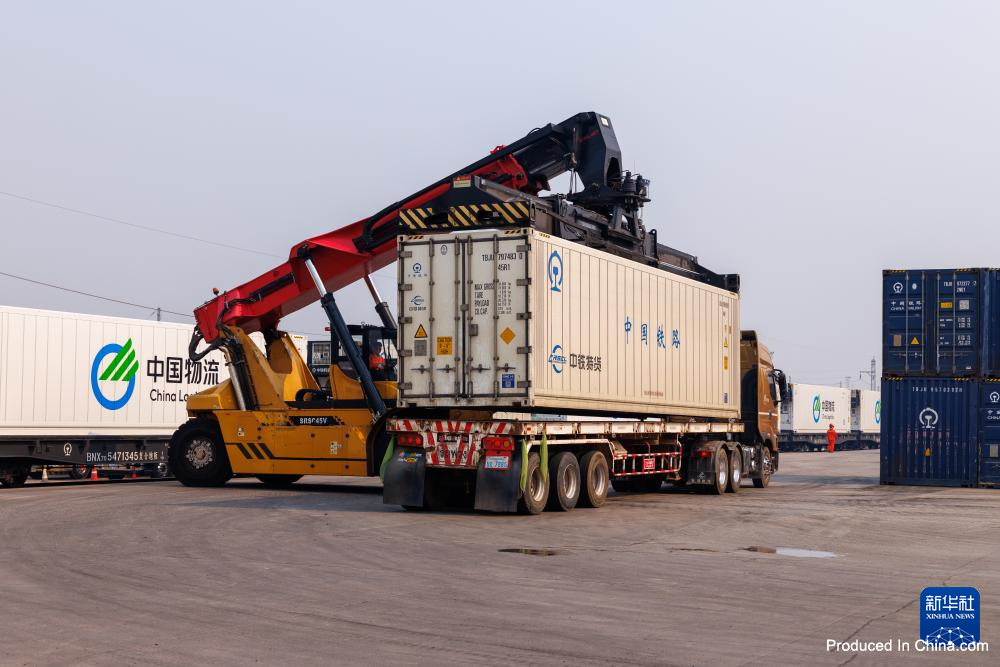
Smooth logistics drive regional trade. At the busy Vientiane South Station freight yard — the only single freight station and largest freight hub on the Lao section — ’April to August is fruit season, with two or three fruit special trains daily; 903 wagons and 17,000 tons of fresh fruit have been shipped this year,’ said station master Wang Guoquan.
By April, the railway had operated 21,000 cross-border freight trains carrying over 18.6 million tons, with cargo expanded to more than 3,800 categories covering all 31 provinces of China and countries including Laos, Thailand and Vietnam. In the first quarter, imports and exports via the railway reached 6.81 billion yuan, up 62.7% year-on-year.
At the transshipment yard 3.9 km from Vientiane South Station, standard-gauge and meter-gauge container transfer runs efficiently. Since July 2022 it has transferred 29,000 containers and 326,000 tons, seamlessly linking the China-Laos Railway with Thai railways. ’Rail transport from Kunming to Laem Chabang Port in Thailand is faster and more reliable than traditional shipping,’ a Thai logistics executive said.
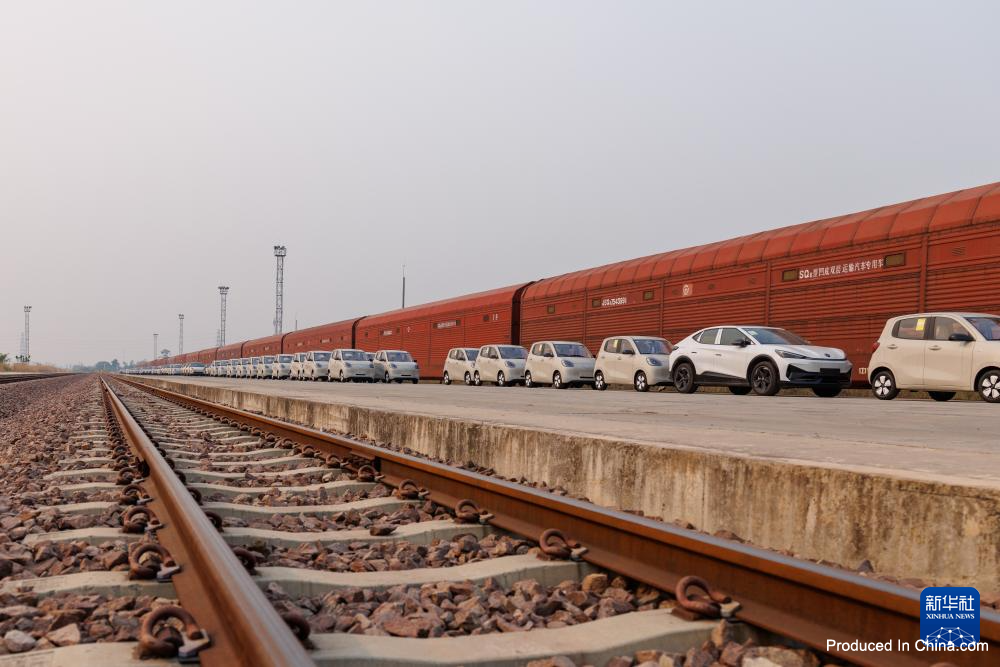
Notably, cargo structure is changing profoundly: in the first quarter, exports of the ’new three’ — solar products, NEVs and others — surged 10.4 times, with solar products up 43.2 times. The railway is transforming from a ’resource corridor’ into a diversified ’industrial synergy corridor’.
Technology integration cultivates local talent. In the Vientiane locomotive workshop, 28-year-old Lao fitter Phetphimeng Monthanady inspects EMU components — one of Laos’ first female locomotive fitters, now skilled in all maintenance procedures. ’My Chinese masters taught me not only technology but also a rigorous, meticulous work attitude,’ she said; the job lets her support her sister’s university education.
Growth stories keep emerging along the line. Lao driver Songsay Laoliu now pilots international trains independently and still exchanges tips with his Chinese master by phone. ’I will pass on what I learned to more young Lao people,’ he said.
He Linxian, head of the Vientiane operations management center, said Chinese experts train Lao technical staff through a master-apprentice model; 780 Lao employees now work independently, 32 Lao drivers have licenses and 24 Lao staff hold management posts.
’We built a 1+N technical rule system suited to Laos and formulated the country’s first railway technical standards. Localization of talent and standards is the key guarantee of sustainable development,’ He said.
From people-to-people connectivity to trade upgrading, from technology transfer to joint standard-setting, the China-Laos Railway crosses mountains and seas and connects hearts. On the journey toward a China-Laos community with a shared future, Fuxing and Lancang trains are speeding along this steel artery toward a future of shared prosperity.

