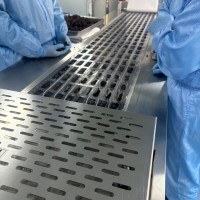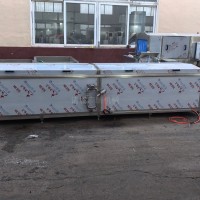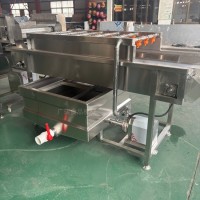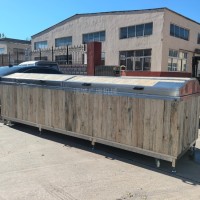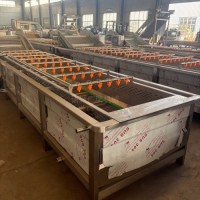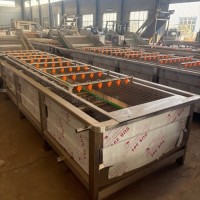
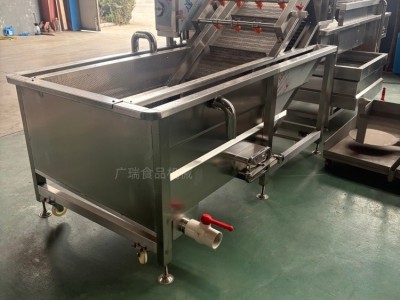

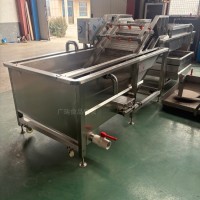
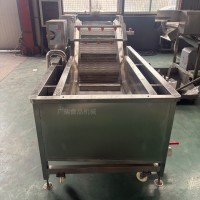


Fresh Polygonatum Washing Production Line
Processing flow for dried Polygonatum fruit: soaking tank -> washing machine -> steaming -> sun-drying (steaming and sun-drying repeated several times according to the process) -> flavoring -> packaging -> pasteurization and cooling line.
Processing flow for fresh Polygonatum fruit: soaking tank -> washing machine -> steaming -> sun-drying (steaming and sun-drying repeated several times according to the process) -> flavoring -> packaging -> pasteurization and cooling line.
Nine-steaming-nine-sun-drying (jiu zheng jiu shai) is a traditional Chinese herbal processing method. The specific steps are:
- Material selection: choose thick and plump Polygonatum; after steaming and drying the taste is better and the medicinal effect stronger.
- Washing: wash the Polygonatum with the fresh Polygonatum washing line to remove soil and impurities from the surface.
- First steaming: put the washed Polygonatum into the steaming basket of the Polygonatum steamer and steam over high heat. The steaming time must be sufficient, usually until the Polygonatum is thoroughly cooked.
- First sun-drying: take out the steamed Polygonatum and dry it in the sun on the drying bed; choose a well-ventilated place and avoid strong sunlight and rain.
- Repeated steaming and drying: put the sun-dried Polygonatum back into the steamer to steam again, then dry it again. This process must be repeated nine times, i.e., nine-steaming-nine-sun-drying.
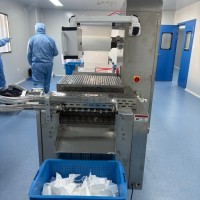
The production process of nine-steaming-nine-sun-drying Polygonatum is complicated, but by this method impurities are removed and the product becomes purer, which also helps the human body better absorb the medicinal effect of Polygonatum. The processed Polygonatum is packed with a fully automatic continuous stretch film vacuum packaging machine.
Working principle of the stretch film packaging machine:
The process starts with lower film unwinding; the film is gripped by the chain and conveyed to the heating zone for pre-heating. Then, in the forming chamber, it is stretched and formed by heat and vacuum into a custom-shaped container (tray). The formed lower film enters the filling area where products are loaded, then together with the upper film enters the vacuum sealing chamber, where vacuuming or flushing with protective gas (such as nitrogen or carbon dioxide) and heat sealing are carried out. Finally, the cross-cutting and longitudinal cutting systems separate the film into individual packages, and waste film is collected by the recycling system.